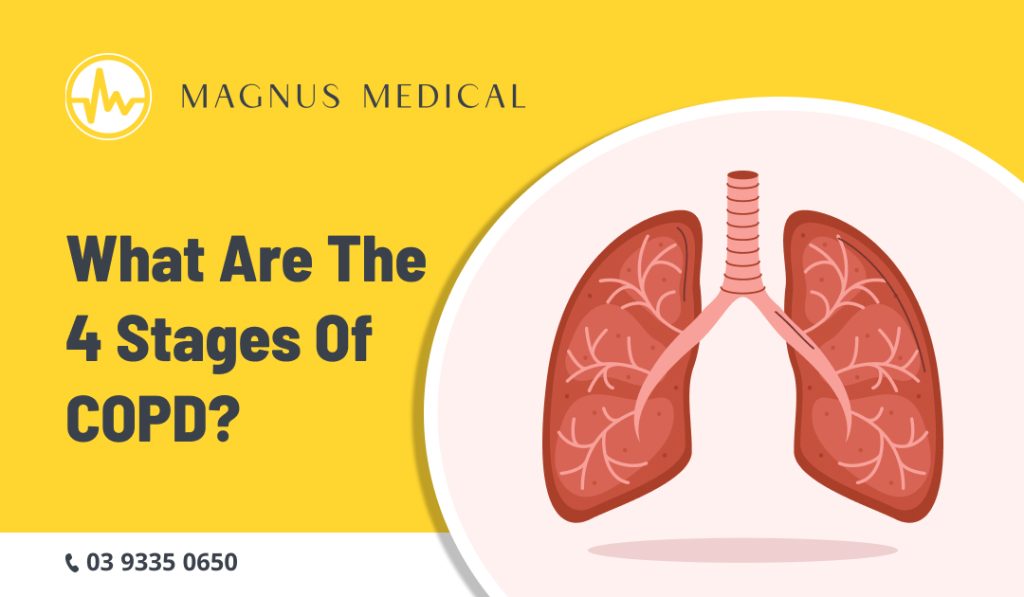
People struggling with COPD generally face difficulty breathing, shortness of breath, and a persistent cough. COPD is divided into grades or stages, based on how far it has developed. People over the age of 40 and smokers are at high risk of developing COPD. In this blog post, you will learn about the 4 stages of COPD, how long you can live with COPD, and possible treatment options.
COPD stands for Chronic Obstructive Pulmonary Disease. It is a long-term lung condition that can get worse with time. Here are the 2 most common conditions that make up COPD:
In emphysema, the alveoli in your lungs are damaged. Air gets trapped inside, making it difficult to breathe in. On the other hand, in chronic bronchitis, the lining of your airways becomes irritated and produces a lot of mucus, causing difficulty breathing and a chronic cough. COPD affects many people, especially older people.
Primarily, COPD is divided into four stages. Your GP (Glenroy GP) will use your COPD stage to assess the severity of your COPD and guide your treatment. To determine the stage of COPD, a general practitioner will look at your spirometry or other pulmonary function test results, symptoms, history or risk of exacerbations, and other health conditions.
COPD Stage 1 is considered a mild stage. At this stage, you will not have any idea that there is anything wrong with your lung function. If your FEV1 lies between 80 and 100% of your predicted value, then the doctor may assign you Stage 1 COPD.
Symptoms: If you are assigned Stage 1 on your spirometry test, you may not notice any symptoms. If you notice any symptoms, you may face increased mucus production and develop a cough. Many people mistake the early stages of COPD for the flu.
Treatment: Your doctor may suggest a bronchodilator medication to open the airways in your lungs.
If your FEV1 drops to 50 to 79% of your predicted value, your healthcare provider may assign you Stage 2 COPD.
Symptoms: During Stage 2 COPD, your symptoms may worsen compared to Stage 1. Your mucus production and coughing may become more severe, and you may struggle with shortness of breath when exercising or walking. Generally, it’s in this stage that people feel that something is not going well and seek medical attention from experienced doctors of Glenroy.
Treatment: Your doctor may suggest a bronchodilator medication to boost airflow to your lungs.
Stage 3 of COPD is considered severe, and your forced expiratory volume lies between 30 to 50 percent of your predicted value. You may have difficulty breathing while doing household chores.
Symptoms: During Stage 3, coughing and shortness of breath usually get worse, and you may find you get tired more easily than before. Here are some other symptoms:
Treatment: The treatment options for Stage 3 can be similar to Stage 2. You may need oxygen therapy in Stage 3.
Stage 4 is very severe. Your forced expiratory volume is less than 30% of your predicted value, and your blood oxygen levels are also low. In Stage 4, the risk of developing COPD complications also increases.
Symptoms: In Stage 4, you may have frequent flare-ups that can be fatal. You may find it difficult breathing even when you are resting.
Treatment: The treatment options for Stage 4 can be similar to Stage 3. Your doctor may also suggest lung surgery to enhance breathing.
COPD is a lung condition that can affect both men and women. However, keep in mind that COPD is not contagious.
COPD life expectancy may vary depending on the disease’s severity. The life expectancy of people with COPD can be influenced by many factors, such as the stage of the disease, smoking habits, and overall health condition.
Yes, COPD is considered a disability in Australia if it greatly affects your ability to carry out daily activities.
Yes, you can fly if you have COPD, but you may need careful planning and consultation with a doctor. You may need extra medication, supplemental oxygen, or other arrangements based on your condition.
Although the damage to your lungs cannot be reversed, early COPD management can help slow disease progression and relieve symptoms.
Conclusion
COPD is divided into 4 stages based on how much lung function has decreased. It will get worse over time if not managed properly. There are many things that can be done to slow the progression of the condition. You can get in touch with Magnus Medical Clinic, where our doctors will closely work with you to find the best treatment option.
Other Useful link: