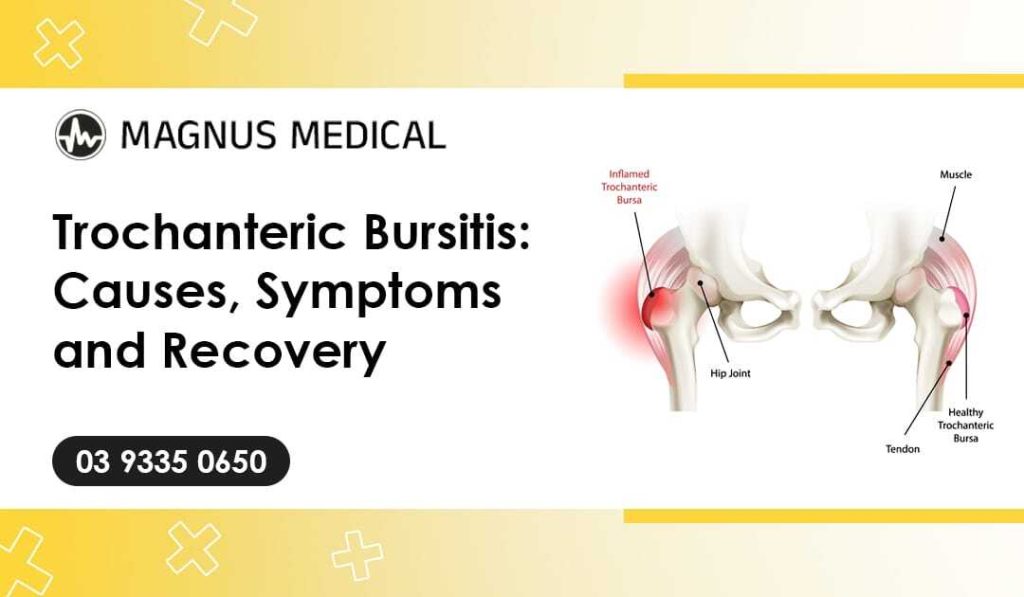
Trochanteric bursitis occurs when a bursa near your hip joint becomes irritated. Bursae are fluid-filled sacs that cushion the tissues and bones around your joints. Trochanteric bursitis is a kind of hip bursitis. You may be recommended to perform trochanteric bursitis exercises to get rid of this condition.
Table of content
- What is trochanteric bursitis?
- Trochanteric bursitis symptoms
- What causes trochanteric bursitis?
- Trochanteric bursitis MRI
- Trochanteric bursitis treatments
- Trochanteric bursitis exercises to avoid
- trochanteric bursitis recovery time
- Conclusion
What is trochanteric bursitis?
Trochanteric bursitis is a swelling that you experience close to your hip joint. It is a particular type of bursitis. Bursitis is swelling in a fluid-filled sac known as a bursa. Bursae cushion spaces around bones and other tissues. They seem like bubble wrap that protects the structure throughout your body.
Your hip joint is an area where your thigh bone attaches to your pelvis. The outside, upper edge of your femur is known as the greater trochanter. Trochanteric bursitis occurs when the bursa that protects your greater trochanter becomes damaged or inflamed. You should visit a GP Glenroy if you have hip pain, and if you need further treatment, they may recommend you visit a physiotherapist or chiropractor.
Trochanteric bursitis symptoms
One of the most common symptoms of trochanteric bursitis is hip pain. Apart from this, you might feel pain:
- Outside surface of the hip
- Outside of your upper thigh
- Your butt
- When you are lying on the painful hip
- Pain that is worst when getting out of your chair
- Pain when moving or using your hip, like when using the stairs
What causes trochanteric bursitis?
Your bursa can get irritated, injured, or squeezed as well. Causes include:
- Performing repetitive activities. You might also have bursitis if you often climb stairs, lift or carry boxes at your place of business, or remain standing while at work.
- Activities and athletics will cause stress to your hip joint; hence, you have to prevent additional physical strains, such as lying for too long on your hip.
- Getting any falls or hits on the hip causes a hip injury as well as the hip. Bursitis can also result from trauma to your hips while playing sports.
- Issues with your posture: Health conditions that affect the shape of your lower spine or hip joint, which can put excess pressure on your bursa. Hip bone spurs, scoliosis, having legs that are different lengths, and calcium deposits in the tendons that connect to your hip can all contribute to bursitis.
Trochanteric bursitis MRI
An MRI is rarely required for trochanteric bursitis. It is usually made based on your medical history and a physical examination of your hip. MRI is usually conducted for serious cases.
Trochanteric bursitis treatments
Usually, patients with trochanteric bursitis require rest. Avoid the activity or positions that can trigger irritation to your greater trochanteric bursa. It’s essential to take a break from activities that put excessive pressure on your hip to give the bursa time to heal. You can ask a healthcare provider how long you’ll need to rest and avoid certain physical activities. Here are other trochanteric bursitis treatments:
- You can use a cane or crutches to alleviate the pressure you put on your hip while you are walking and moving.
- You can reach out to a physiotherapist for physiotherapy Glenroy to strengthen the area around your injured hip. A physiotherapist will give you exercises and stretches.
- In serious cases, surgery may be required. It’s rare to need surgery for trochanteric bursitis.
Trochanteric bursitis exercises to avoid
- Running puts excess pressure on the hip, and when the bursa is already damaged or inflamed, this is not a good idea.
- Bicycling: Riding a bicycle puts most of the pressure directly onto the hip. This can increase pain and worsen bursitis. Therefore, bicycling should be restricted to a late stage in the recovery process.
- Deep squats: These exercises also need the involvement of the hips. There is no way to do a deep squat without putting excess pressure on the hips.
- Leg lifts: Whether side leg lifts or straight leg lifts, these exercises also need strong hip muscles and put much pressure on the hips. These exercises should be avoided in those with hip bursitis.
- Cardio machines: Things like stair climbers, treadmills, and elliptical machines all need strong hip muscles to exercise on them. All cardio machines involve exercises to avoid with hip bursitis.
Trochanteric bursitis recovery time
Trochanteric bursitis usually starts to heal after a few weeks to a few months of proper rest and appropriate treatment. You might have an increased risk of it recurring if a repetitive motion or activity caused bursitis.
Conclusion
Trochanteric bursitis is swelling close to your hip joint, making it difficult to move pain-free. Talk to doctors at Magnus Medical Centre Glenroy, as soon as you notice hip pain that doesn’t get better in a few days.