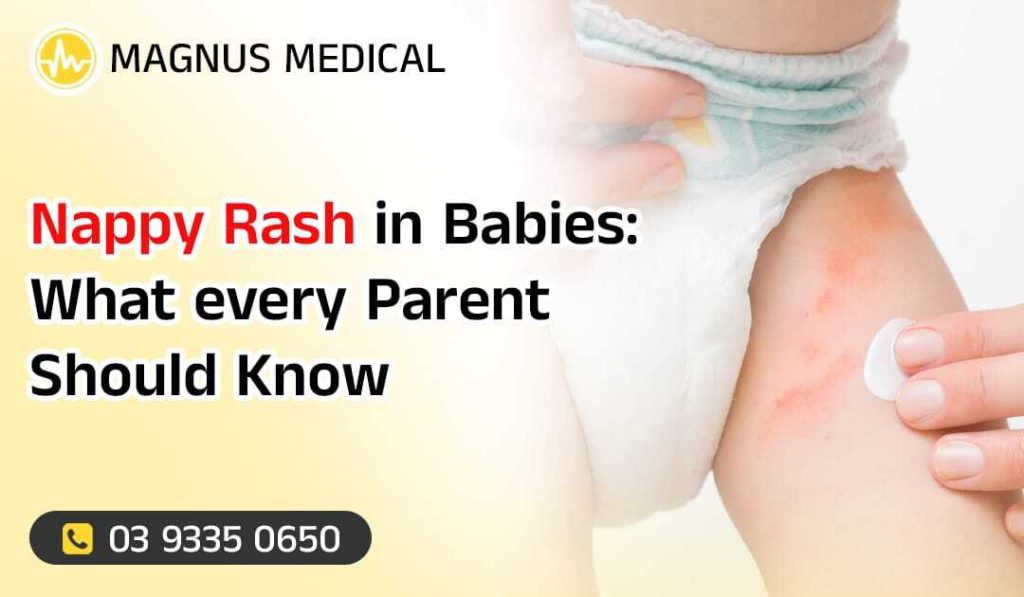
The feeling of walking around in wet diapers or the rash your baby receives from it can be overwhelming. This can happen from nappies. When the rash occurs by a nappy, it is called a nappy rash. Babies and young children often struggle with nappy rash. Nappy rash is common, and there are various things to avoid a bad nappy rash.
Nappy rash is a skin condition, which affects the skin area covered by nappies. It can lead to a red, sore rash that can be annoying and should be treated on time. Toddlers and babies usually get affected by nappy rash. It can range from mild to severe, depending on what causes nappy rash and how it is treated. If your baby is struggling with nappy rash, you can reach out to Glenroy GP, especially if it is persistent, severe, or not improving with home remedies. Frequent nappy changes, using a nappy cream for rashes, and careful cleaning of the skin almost always help it heal.
The most common symptom of nappy rash is irritated, red, and moist skin in the area covered by a nappy. It can impact a small area of skin or spread across the whole nappy area. The area may also be shiny, puffy, or scaly. The rash can be itchy, but in many cases, it may not bother your baby at all. If it is left untreated, it can turn into blisters or open sores.
Babies with extremely sensitive skin are more likely to develop nappy rash. Here are a few things that can cause nappy rash:
When your baby’s nappy is not changed frequently, then it can cause nappy rash. Wee and poo have ammonia and other chemicals which can cause irritation to the skin. When the moisture breaks down the top layer of the skin, it can cause damage. Some babies with sensitive skin often react quickly to any moisture.
Nappy rash can also be caused by thrush. Candida albicans is a type of yeast that leads to thrush and likes moist, warm places such as the nappy area. Nappy rash caused by thrush can be:
Thrush is not painful, but it can be irritating and itchy. It doesn’t heal on its own and can get worse if left untreated.
Some foods, such as acidic fruits and vegetables, can also cause nappy rash for some babies. These may include:
Make sure to use wet wipes and soaps that are made for babies. Some wipes and soaps can cause skin irritation.
Here are some ways you can keep your baby clean, dry, and free from irritation:
• Make sure to use diaper rash cream prescribed by your doctor.
• Use disposable nappies if your baby has nappy rash. These will keep your baby’s skin dry.
• Use water-soaked cotton wool to clean the skin of your baby.
• Frequently change your baby’s nappy.
• At bath time, you need to use a gentle baby wash.
If your baby’s nappy rash doesn’t improve after a week, make sure to consult with a doctor. A doctor may suggest baby rash cream for thrush. After cleaning the skin, put the prescribed amount of cream on the affected area.
Teething can cause nappy rash in different ways. Babies are likely to drool more than usual when they are teething. Digesting this extra moisture can affect little tummies and result in skin irritation and breakdown in the nappy area, especially if the skin is wet for prolonged periods. Babies with teething often experience changes in their bowel movements. This can also lead to nappy rash because the acidity of the stool can cause skin irritation in the nappy area.
Nappy rash may be uncomfortable for babies, but with the right care and treatment, it’s manageable. If home remedies don’t work, consult with a healthcare provider at Magnus Medical.
Other Useful link: