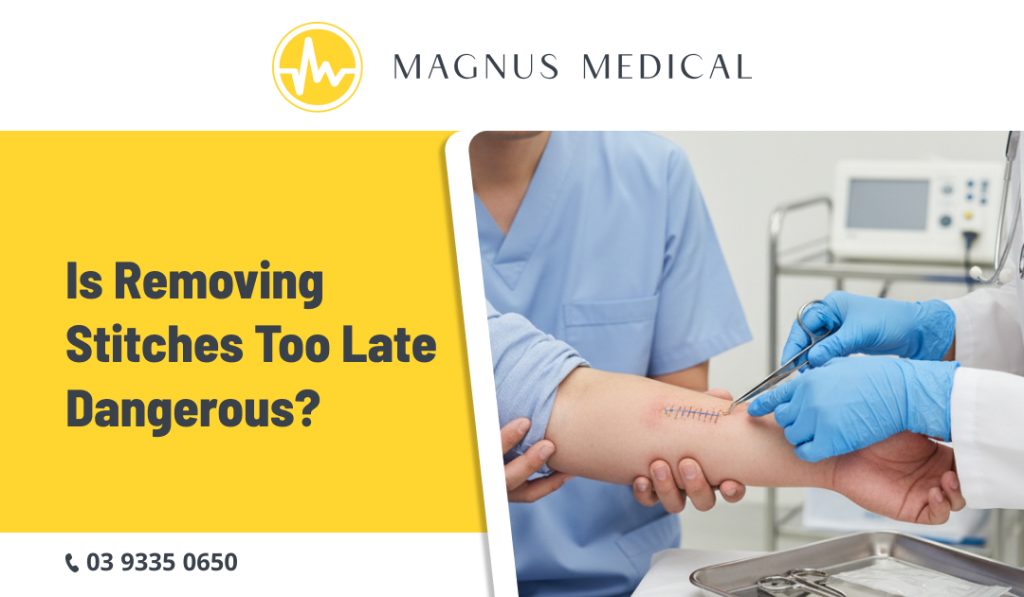
Stitches, also called sutures, play an important role in healing from injury or surgery. They help repair tissues and ensure that the affected area heals correctly. However, removing stitches too late can result in a range of complications that could affect your recovery. Understanding the consequences of late stitch removal can help you pay attention to aftercare advice and accelerate the healing process.
There are different types of stitches your doctor may use, based on your wound.
How long should stitches stay in for?
Generally, stitches are removed after 5 to 10 days, but this depends on where they are situated. A GP doctor or nurse will advise you on the right time to remove sutures. If the stitches are removed too soon, the wound might not have healed completely. If the stitches remain too long, they can be more difficult to remove and may increase the risk of scarring. Dissolvable stitches don’t need to be removed. They will dissolve naturally in a week or two, but some may take several months.
Do GPs do stitches?
To repair your cut, a doctor will first clean your wound, remove any foreign substances, and close the wound with stitches. If you live in Glenroy and want to know how your wound can be cared for at home, you can get in touch with the GP Glenroy at Magnus Medical Clinic. They will give you tips to prevent an infection. Our GP will also:
• Give you a tetanus shot or painkillers, if required.
• Discuss any issues that could affect healing, such as recent illness or diabetes.
• Give you a referral to a specialist if required.
How long do dissolvable stitches last?
Dissolvable stitches dissolve on their own and don’t need to be removed. It may take up to 2 weeks, or longer in some cases.
Should I cover the wound after stitches are removed?
You may need to keep open wounds covered and dry for at least 3 days or as advised by the trusted doctors of Glenroy if you are getting your treatment done by doctors in Glenroy.
Conclusion
You can get a consultation from a general practitioner to determine if stitches are the right option for closing your wound. You can also get in touch with a GP doctor at Magnus Medical Clinic if you want to know when your stitches need to be removed.
Other Services: