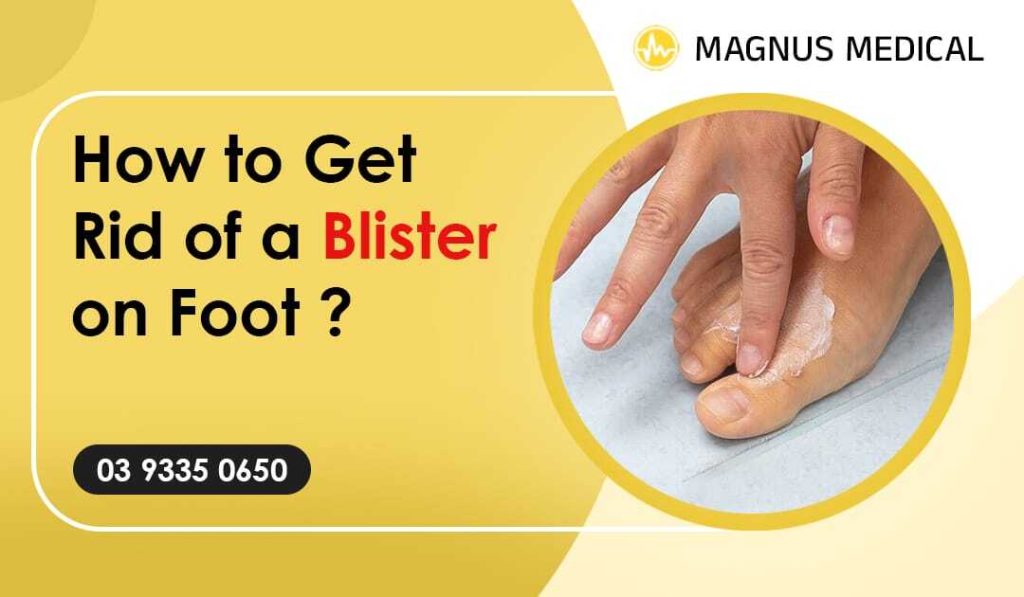
It’s common to have a blister on the foot. Luckily, various home remedies can be used to relieve pain and reduce the risk of repeated blisters. In this blog, we’ll discuss how to get rid of a blister on foot.
A blood blister is filled with blood instead of clear liquid. Blisters are filled with fluid under a layer of skin. Your skin has three layers. The outermost layer is the epidermis, the centre layer is the dermis, and the bottom layer is the hypodermis. Under the epidermis layer of the skin, a blister is formed. It fills with blood or clear liquid, based on the injury that damaged your skin. A blood blister on foot forms when you’ve also damaged the blood vessels in your skin. When your immune system responds to the damage, it leads to inflammation.
Blood blisters commonly develop on your feet, fingers, toes, and hands. You may get them near your joints and on bony areas such as the balls of your feet and heels. Blood blisters on your skin usually heal on their own. Blood blisters in and around your mouth, such as on your lips and inside of your cheek, can have more serious causes. You should see GP Glenroy at Magnus Medical if a blood blister forms anywhere in your mouth.
Blood blisters on foot look like friction blisters. However, blood blisters appear purple, red, or black because they are filled with blood instead of clear fluid. Initially, they appear as a light red color and later on, they turn into a dark color. Blood blisters can be of different sizes. You may feel discomfort or pain in the area of the blister due to the injury that caused it. Individuals with blood blisters can experience itching as well.
Blood blisters can arise from repeated friction or direct pressure on the skin. Blood blisters are most often caused by:
Shoes that are too loose, too tight or ill-fitting can rub against the skin and cause irritation.
Walking, running, sports or dancing can put repeated pressure on certain parts of the foot.
Sudden trauma, such as dropping something on your foot or hitting your toe, can impact or damage small blood vessels under the skin.
Shoes that squeeze the foot can cause the skin to be pinched between the bone and the shoe, increasing the chance of a blister forming.
Blood blisters more commonly form in areas of the foot that experience the greatest pressure and friction during movement.
Most blood blisters heal with home remedies. The goal is to protect the blister and prevent further complications.
Raise the affected limb
Raise the affected foot to reduce swelling and pain.
Ice it up
An ice pack wrapped in a cloth can be used for 10 to 15 minutes at a time. This can help decrease inflammation and pain.
Cover the blister.
Cover the blister with a clean adhesive bandage to protect it from rubbing. Larger blisters can heal if they are covered.
Pressure relief
Don’t do anything that puts too much pressure on it until the blister starts to heal.
Wear comfortable shoes
Pick comfortable shoes with sufficient room for your toes to relax, to reduce friction. If the blister bursts on its own, gently clean the area, put on the antibacterial ointment prescribed by the doctor and cover it with the right bandage.
The most commonly asked question is: Should I pop a blister on the bottom of my foot? In the majority of cases, the answer is no. The blistered skin forms a natural barrier to protect against bacteria entering the wound. Here’s why you shouldn’t pop a blister on your foot:
Sometimes a healthcare professional may suggest that you drain a blister using sterile equipment, but only a healthcare professional should do this and only if it is needed.
Conclusion
If you have a blood blister on your foot, you can try some home remedies. However, if it still doesn’t heal on its own, it’s suggested to reach out to Glenroy Medical Centre doctors at Magnus Medical.
Other Useful link: