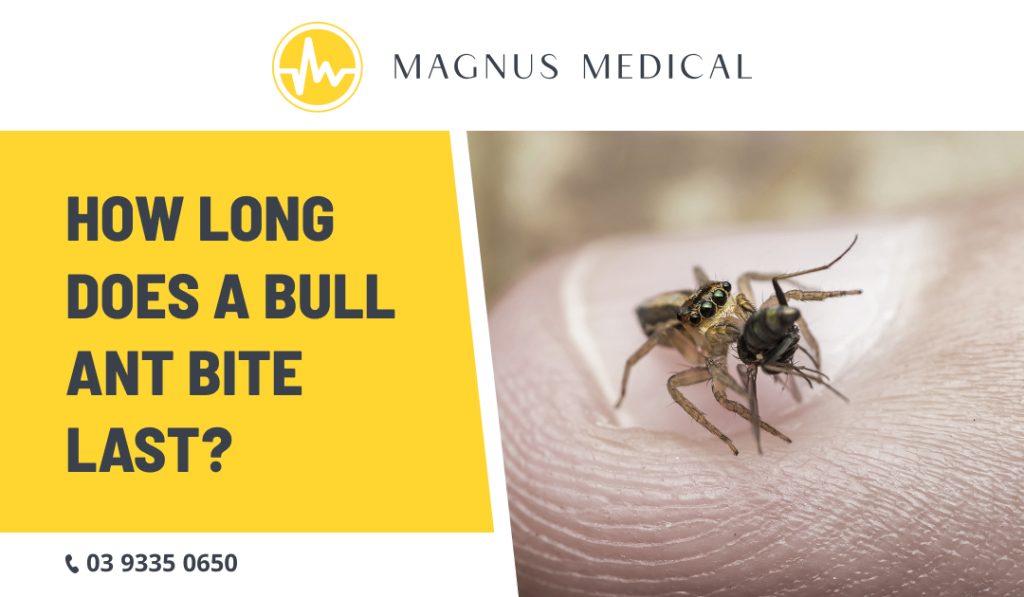
A bull ant bite can be one of the most painful experiences. These creatures are among the most dangerous insects. They can grow up to 40 mm in length. It’s essential to understand how to respond if you are bitten by a bull ant and when you need medical attention.
A bull ant bite looks like swollen, painful, red, warm skin with intense pain. You may also notice two fang marks with a central indentation where the stinger entered, usually causing a small blister within a day or two. You may need to wash the area immediately and apply a cold compress. It is usually characterised by severe pain and results in large swelling. If you observe these signs, you can consult with a GP Glenroy to get possible treatment. Bull ant bite symptoms may include:
Most bull ant bite pain increases within the first hour and gradually reduces over 2–6 hours. The pain caused by ant venom can vary in intensity based on individual sensitivity. However, some people experience discomfort for up to 24 hours. If swelling and pain worsen after the first few hours or persist for more than 24 hours, seek medical attention, as this may indicate an ongoing allergic reaction or infection.
You must be aware of first aid when a bull ant bites you or someone you know, which can reduce pain and prevent further complications. The bite may lead to significant pain, but bull ant bite treatment can help relieve pain. Here’s what first aid bull ant bite treatment includes:
Bull ants use their powerful jaws to bite. They sting using their venomous stinger on their abdomen, causing intense pain. The sting is the main source of causing intense swelling and burning. They can sting repeatedly, unlike a bee’s sting. While their bite is a strong nip, the venom from the sting can cause significant pain, so it’s both a sting and a bite.
Yes, a bull ant bite can be life-threatening, causing intense pain. Venomous stings are worse than bites, which can cause severe allergic reactions, dizziness, and a rapid heart rate. If you notice adverse symptoms, like widespread swelling or breathing difficulty, you need immediate medical attention. You can also get in touch with trusted doctors at Magnus Medical Centre Glenroy.
Now, you are aware of possible symptoms and treatment for a bull ant bite. If your symptoms worsen over time, you need immediate medical attention. You can also get in touch with GP doctors at Magnus Medical Centre.
Other Useful link: