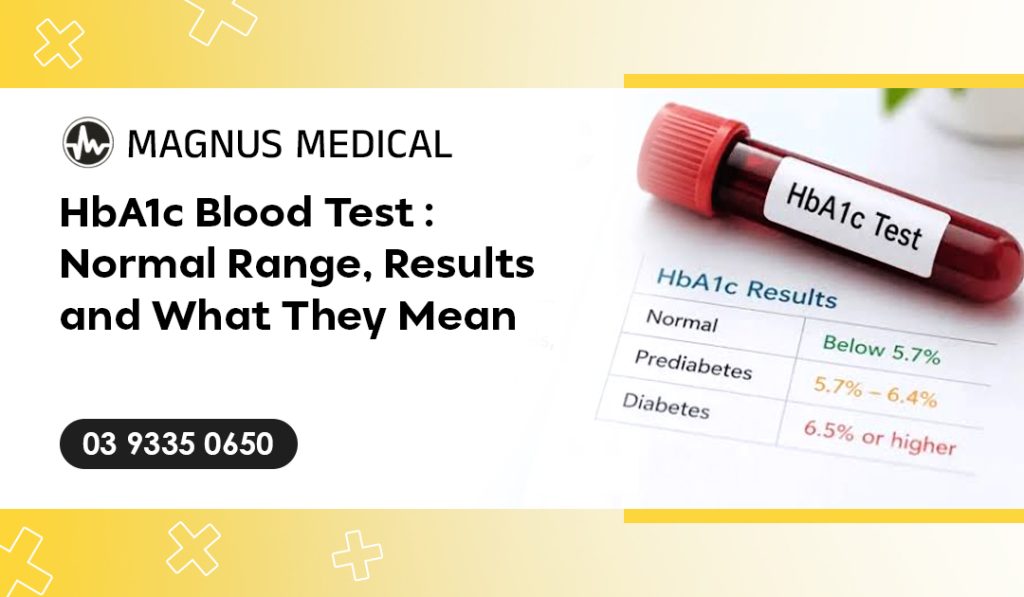
The test that is used to diagnose type 2 diabetes is an HbA1c test. With this type of test, blood sugar levels can be monitored in people struggling with type 1 and type 2 diabetes.
Red blood cells are likely to live for around 120 days. An HbA1c test shows your average blood sugar level from the past 8 to 12 weeks. HbA1c blood test is not like a standard blood glucose test, which is used to measure your blood sugar level at a single point in time. The test is also known as haemoglobin A1c or glycated Hb.
Glenroy Medical Centre doctors may advise you to get an HbA1c blood test done if you are at high risk of diabetes or have symptoms of diabetes. If you are struggling with diabetes, the blood test shows how well your blood sugar has been controlled over the past 8 to 12 weeks. People with diabetes are often advised to get this test done every 3 months. On the other hand, if your blood sugar levels are under control, you may be less likely to need this test done. It’s crucial to keep track of HbA1c in people with diabetes. This is because if your HbA1c is higher, then there will be a higher risk of getting diabetes-related problems, such as:
The amount of haemoglobin present in your red blood cells that has glucose associated with it is measured by an HbA1c blood test. With this test, you will come to know your average blood sugar level over the past 2-3 months, and it is commonly used to monitor diabetes.
| HbA1c result | Interpretation |
| Below 5.7% | Normal range |
| 5.7%–6.4% | Prediabetes range |
| 6.5% or above | Diabetes range |
Normal range: If blood glucose is below the threshold, it can be used to identify prediabetes.
Prediabetes range: If your blood glucose is higher than the normal range, your risk of developing type 2 diabetes will be increased.
Diabetes range: Your results meet the HbA1c range used to identify diabetes.
No. Generally, you are not required to fast prior to your HbA1c blood test because it is primarily used to measure average blood glucose over the preceding months rather than your blood sugar at a single moment. On the other hand, if other blood tests are also being performed at the same time, Glenroy GP at Magnus Medical may provide you with separate fasting instructions.
The accuracy of HbA1c results can be affected by certain conditions like kidney disease, anaemia, recent blood loss, pregnancy, blood transfusions, and some haemoglobin disorders. Your doctor may suggest additional tests if your result does not match your symptoms or other blood glucose measurements.
During the blood test, a sample of blood will be taken from a vein in your arm. After this, the blood will be sent to a laboratory for testing.
You can get in touch with Pathology Glenroy for an HbA1c blood test and confirm whether they perform this type of test. You can get a referral from your doctor. Your doctor will recommend a pathology centre near you. Sometimes, your doctor will collect a blood sample for testing in their clinic. Blood tests are generally done in hospitals.
Conclusion
The blog outlines and explains the HbA1c blood test, when it is done, why it is done, and what happens during the blood test. If you notice that you need to get this test done, you need to get checked by doctors at Magnus Medical Centre, as they will confirm whether you need this test done.