The human body has around 78 organs. What if any one of the organs doesn’t work properly? It may lead to several health conditions. Each organ of the body plays an important role in the body. Some organs are important, while others can be removed and a person can still survive, although you might need medical treatment to live without them. It might seem impossible to live without the pancreas, which plays an important role in digestive health. But it’s actually possible and more common than you may think. In this guide, we’ll discuss how you can survive without a pancreas and how to manage this condition.
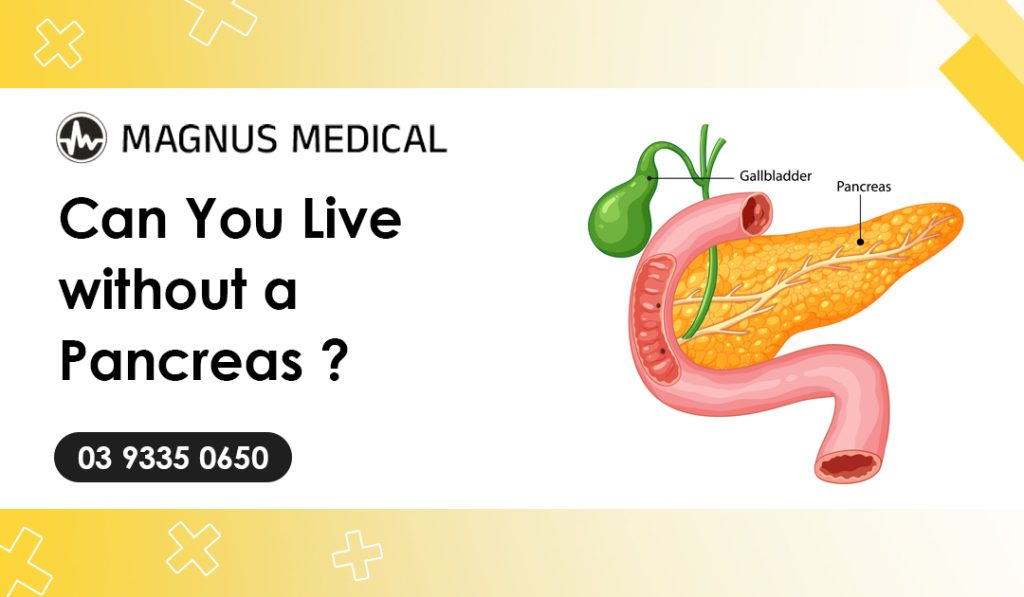
The pancreas is around 6 inches long gland, located in the abdomen. Its shape is like a flat pear and is surrounded by the stomach, liver, spleen, small intestine, and gallbladder. The wide end of the pancreas on the right side of the body is known as the head. The middle sections are the body and neck. The thin end of the pancreas on the left side of the body is known as the tail. The uncinate process is the part of the gland that bends backward and under the head of the pancreas. Three major blood vessels cross behind the pancreas: the superior mesenteric vein, the superior mesenteric artery, and the portal vein. The pancreas is both an endocrine gland and an exocrine gland and has two main functions: blood sugar regulation and digestion.
The pancreas is located in the upper abdomen behind the stomach and in front of the spine.
The pancreas is a flat, long gland located across the back of the abdomen, between the spine and stomach. A gland is an organ that releases substances into your body that help you to work. The pancreas is comprised of three parts:
An individual’s body makes a hormone called insulin that regulates sugar. If a body does not release this specific hormone, insulin, the blood’s sugar content level may be too elevated. Without it to promote absorption of blood glucose, the body can’t use it, and as a result, the person may suffer from malnutrition and other health problems. This part of the pancreas also helps to release digestive juices in the body that are used to break down and absorb your meal after it is consumed. That section of the pancreas gland that produces digestive juice is called the exocrine pancreas. The endocrine part of the pancreas gland helps to produce insulin.
Hormones enter the bloodstream, and digestive enzymes enter your body by a tube into part of your small intestine known as the duodenum. The liver and gallbladder will use these and other fluids to put juices, or chemical compounds, into the duodenum, so all organs can help your body with digestion.
The pancreas is categorised into five main anatomical parts:
The short answer is yes. You can live without a pancreas. However, you will have to consume enzyme pills suggested by your doctor to digest food and insulin shots, which can help in controlling your blood sugar for the rest of your life. Though it’s rare case to remove the pancreas, surgeons may remove the whole pancreas if you have pancreatic cancer, major injury to your pancreas or severe pancreatitis.
Symptoms of pancreas problems may include:
If you notice these signs, you can get in touch with GP Glenory at Magnus Medical.
It completely depends on the primary reasons for its removal; non-cancer conditions like chronic pancreatitis will allow for a near-normal lifespan, while cancer cases carry significantly lower survival rates.
Conclusion
The blog shares different parts of the pancreas, common signs of pancreas problems, whether you can live without a pancreas, and life expectancy without a pancreas. For more help, you can get in touch with Magnus Medical, a Glenroy Medical Centre.