Calf pain can affect your daily activities, whether you are running, jumping, or simple walking. Now, you might be wondering: Is it a torn calf muscle or a strained calf muscle? What should I do? Who can I ask?
It’s essential to understand calf strain vs calf tear, which is the first step in your recovery. A calf tear and a calf strain both can affect muscle fibers in the lower leg, but a strain can be due to mild or moderate overstretching, while a tear indicates more significant fiber disruption.
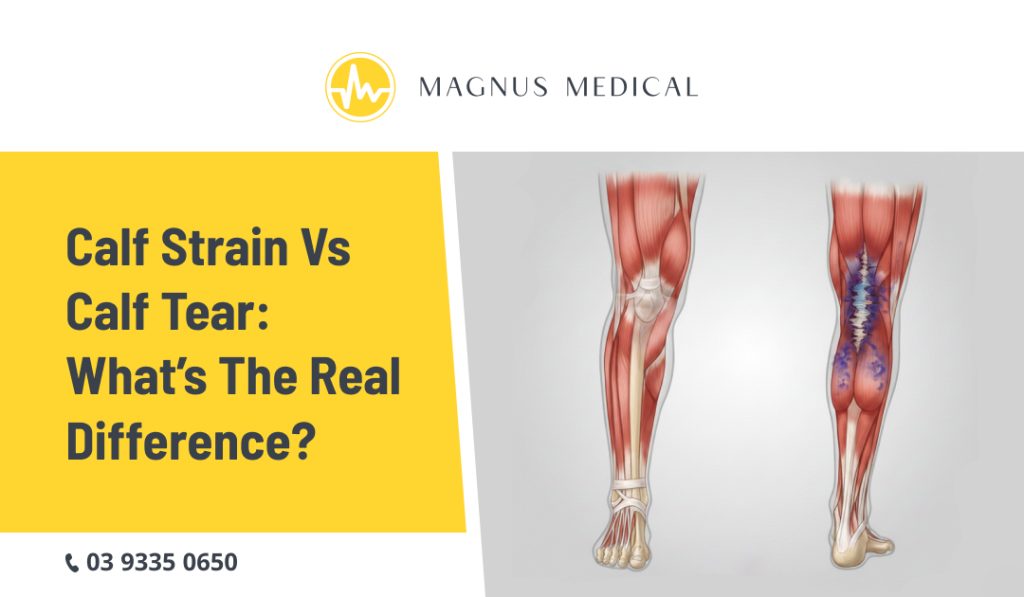
The calf is made up of gastrocnemius and soleus muscles, which help you run, walk, climb stairs, and push off the ground. These muscles cross the ankle and, for gastrocnemius, the knee, that’s why they are susceptible to overstretching and sudden load. Most calf injuries happen when the muscle lengthens forcefully under tension, such as during jumping or sprinting. This mechanism mimics patterns seen in other lower-body conditions where several joints and tissues overlap. When the force exceeds the muscle’s capacity, microtears or complete ruptures may occur.
A calf strain occurs when the muscle fibers stretch beyond their limit, causing microscopic tearing. This may happen with sudden acceleration, fatigue, incomplete warm-up, or overuse. Strains usually cause swelling, tightness, tenderness, or difficulty rising onto your toes.
Calf Strain Grades
A calf tear is a more serious injury than calf strain which can lead to a complete or significant rupture of the muscle fibers. Forceful movements such as jumping or sprinting can lead to calf tear. More severe tears can lead to bruising, rapid swelling, and difficulty pushing off the foot or bearing weight. In some cases, a palpable gap can be formed in the muscle.
A calf strain causes tight, pulling, or cramping sensation in the back of the lower leg, especially during pushing off the foot or walking. Many people struggle with tenderness or stiffness that worsens with activity. These signs usually resemble other soft-tissue conditions, such as those compared in fracture and sprain. A calf tear, on the other hand, presents much more dramatically. Patients with calf tear usually feel a sudden sharp pain followed by immediate weakness or inability to walk.
If you get in touch with doctors in Glenroy, they will begin with a detailed history and physical examination. They will check where the pain is, your strength and flexibility, the cause of the injury, and how you move. Simple tests will be conducted, such as hopping, calf raises, and walking, which can help guide the diagnosis and treatment plan for torn or sprained calf muscle. In some cases, imaging is required to check the location or extent of the injury or to identify other problems. This may include:
Imaging is usually recommended when symptoms are severe or when there is concern about Achilles tendon injury.
If you experience sudden calf pain, make sure to get medical help. If you continue to perform activities, they can worsen the injury and lengthen your recovery. Whether it’s a calf strain or tear, it’s essential to book a physiotherapy session with physio Glenroy at Magnus Medical Centre for a proper assessment, accurate diagnosis, and a customised treatment plan to meet your specific needs. Physiotherapists will check whether your injury is a tear or or a strain using a thorough clinical examination and movement testing, as well as MRI or ultrasound if required.
Conclusion
A calf strain involves mild to moderate muscle fibre overstretching, while a calf tear is a more severe or complete rupture. Recognising the difference is important for proper treatment and recovery. Early assessment, appropriate care, and guided rehabilitation can help you heal safely and return to your normal activities with confidence.