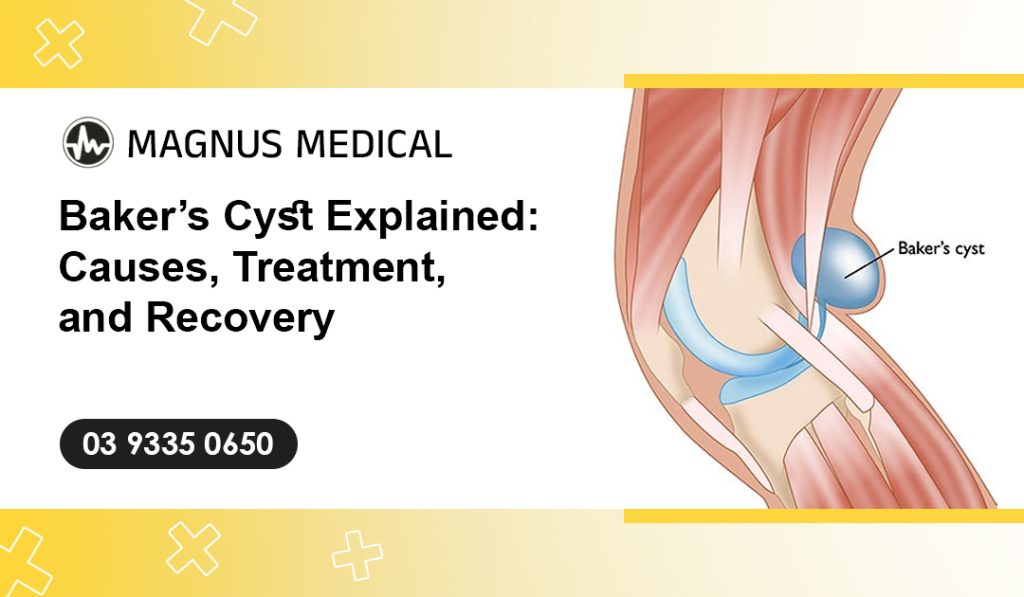
On the back of your knee, fluid-filled lumps are called Baker’s cysts. When something causes swelling in your knee, it could lead to this condition. Usually, they are not serious. However, you need to see a healthcare provider to get it diagnosed.
Table of Content
A Baker's cyst, also called a popliteal cyst, is a swelling of fluid that develops behind the knee. It occurs when excess fluid that is normally inside the knee joint, known as synovial fluid, collects in a small sac of tissue behind the knee.
The lump or fullness behind the knee that is felt in a Baker's cyst. There may be no other symptoms than the swelling of the knee. Others may have stiffness, tightness, pain, or trouble bending the knee.
The condition is named after William Morrant Baker, a 19th-century British surgeon who characterised the condition and linked it to knee problems. This condition is named for the doctor who first described it and is unrelated to the process of baking.
A Baker’s cyst forms when something inside the knee causes the joint to produce excess fluid. When the excess fluid shifts to the back of the knee, it forms a Baker’s cyst. Here are the most common causes:
Here are the most common symptoms of Baker’s Cyst:
You may feel discomfort when sleeping with a Baker’s cyst, especially if pressure on the back of the knee increases your symptoms.
Try sleeping on your back
Place a pillow under your lower leg if you are unable to sleep on your back. Try to avoid using positions that make it difficult for you to sleep or put pressure on the swollen area.
Try side sleeping
You need to place a pillow between your knees when sleeping on your side, as it can help keep the legs in a comfortable position.
Elevate the leg
You need to elevate your leg slightly to reduce swelling. Pay close attention to make sure your leg is fully supported to ensure comfort.
Consider cold therapy before bed
You can wrap a cold pack in a towel to reduce swelling and pain. Avoid placing ice directly on your skin. Try sleeping in the right position to avoid discomfort.
There is no single time limit for how long a Baker’s cyst will last. Some Baker’s cysts improve when the underlying knee issues decrease. On the other hand, some Baker’s cysts may remain for several weeks or months, especially when the condition leads to excess joint fluid formation. How long a Baker’s cyst lasts may depend on:
Treatment of Baker’s cyst depends on the cause and severity of the cyst. Common treatment options include:
Rest and activity modification
With proper rest, it may help reduce swelling and irritation.
Ice
You can apply an ice pack wrapped in a towel to reduce swelling and pain.
Pain-relieving medicines
Over-the-counter pain medicines may help this condition. But they aren’t for everyone. For advice tailored to you, contact the doctors at Magnus Medical Centre Glenroy.
Compression & elevation
Elevation and compression may help reduce swelling depending on your condition.
Physiotherapy
A physical therapist or Physio Glenroy at Magnus Medical can suggest some exercises that can help to improve knee strength and motion.
Treating the underlying knee problem
Healthcare professionals may help you identify the root cause of the problem. For example, if arthritis or other conditions cause excess fluid, then treating those conditions may reduce the cyst.
Here are some things to avoid:
Recovery from a ruptured Baker’s cyst may vary from one person to another. Basically, the recovery time may depend on the severity of the condition and the amount of inflammation. Swelling and pain may reduce over days to weeks, but some people experience symptoms for longer.
Final Thoughts
A Baker’s cyst forms at the back of the knee. If you are struggling with this condition, you can get in touch with doctors at Magnus Medical Centre.