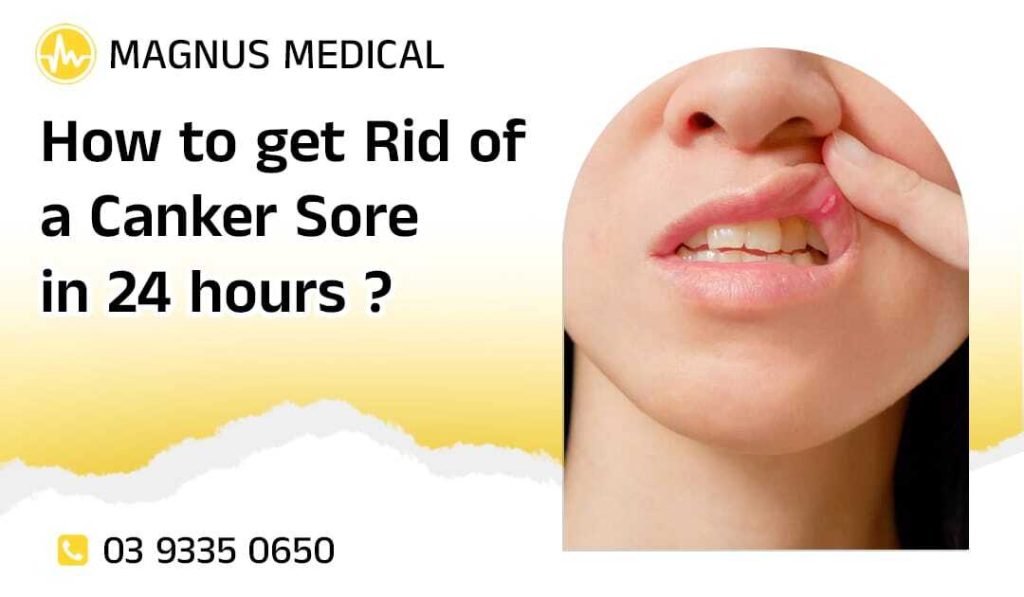
You may have heard of different types of mouth sores. Among them, canker sores affect many individuals. They are not contagious, but can cause extreme pain. The exact cause is unknown. However, minor injuries to the inside of your mouth can cause canker sores. Treatments may include over-the-counter and prescribed ointments, which can reduce the pain associated with canker sores. Most canker sores usually go away within two weeks.
Canker sores are small ulcers in the lining of your mouth. A canker sore is a yellowish or white mouth sore with a red border. It may appear at the base of your gums, on or under your tongue, or inside your cheeks or lips. There are different types of canker sores:
Here are the most common symptoms of canker sores:
The exact cause of canker sores is unknown. Some people confuse canker sores with cold sores. But canker sores are different from cold sores. There can be various causes of a canker sore:
While complete healing may take between 7 and 14 days, the right approach can significantly reduce pain and improve recovery within the first 24 hours. You need to implement multiple strategies rather than depending on a single treatment. You can start with immediate pain relief, then start salt water rinses every 2–3 hours. You need to monitor your progress throughout the day. Decreased redness around the edges, reduced pain, and easier eating indicate successful treatment. Most people with mild canker sores notice improvement within 12–18 hours after following a comprehensive approach. If symptoms persist, you can get in touch with a GP Glenroy at Magnus Medical.
Canker sores and cold sores are not the same. Canker sores are not caused by the herpes simplex virus and are not contagious. On the other hand, cold sores are caused by the herpes simplex virus and are contagious. However, it is possible that you might have a canker sore and a cold sore at the same time.
You should avoid popping a canker sore. Unlike a cold sore, a canker sore is an actual wound or an ulcer within the mouth. The swelling from canker sores contains a mixture of bacteria, white blood cells, and other fluids. If you try to pop a canker sore, it can increase the risk of added pain and infection. Instead of popping a canker sore, try to keep your hands away. Most canker sores go away within two weeks. If you experience persistent pain and the sore doesn’t go away on its own, make sure to consult a doctor or dentist.
Now, you know what a canker sore is, its causes, symptoms, and possible treatment options. You must also be aware of canker sore stages, which are written below:
Conclusion
The blog shares information on a condition called a canker sore with its causes, symptoms, and treatments. If you notice symptoms of a canker sore at an early stage, make sure to consult a doctor at Magnus Medical, a reputed medical centre Glenroy.
Other Useful link: