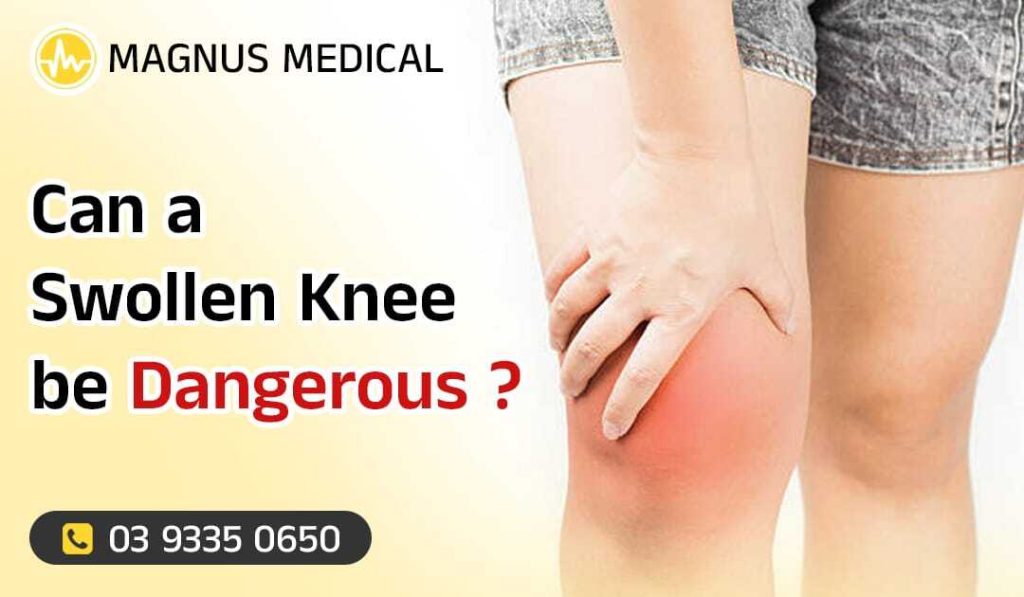
A swollen knee may seem like a temporary pain that keeps you from doing your daily tasks. But there could be some warning signs of pain behind the knee that you shouldn't ignore.
When too much fluid builds up around or in the knee joint, it can cause swelling, which can make the knee look bigger, hurt, and feel stiff. Some cases of knee swelling go away on their own, but if the swelling is severe or lasts for a long time, it could be a sign of an infection, arthritis, vascular problems, or another serious condition. If you don't treat knee swelling, it can hurt your joints or make it harder for blood to flow. To get the right care and keep your quality of life and mobility, you need to know when a swollen knee is not a big deal and when it could be dangerous.
Excess fluid building up in or around the joint can lead to a swollen knee. Doctors call it knee effusion. While it can be caused by something minor like a strain or bump, it may also be associated with more serious problems, including:
Since vascular problems can lead to knee swelling, it’s crucial to consider circulation issues as a potential underlying cause, especially when swelling spreads beyond the knee joint or persist for long time.
The real risk comes when swelling in the knee is left untreated. When it is left untreated, it can limit mobility, worsen joint damage, and decrease quality of life. According to clinical research, if swollen knee is not treated on time, it can result in cartilage loss and long-term disability.
Knee swelling or back of knee pain can occur suddenly or develop over time. It’s essential to understand the most common causes of swollen knee to seek medical attention from doctors in Glenroy:
Trauma, like fractured bone, torn ligament, or meniscus tear, is one of the primary causes of a swollen knee with pain. Injuries usually trigger fluid buildup or bleeding inside the joint, leading to rapid swelling.
Wear and tear arthritis is one of the most common reasons adults over 40 struggle with chronic knee swelling. As knee cartilage breaks down, the bones rub against each other, causing excess fluid and inflammation.
Diseases like lupus, rheumatoid arthritis, or gout cause the immune system to attack tissues, leading to swelling and joint inflammation.
A bacterial infection inside the knee joint can be dangerous and needs urgent medical attention. Warmth, redness, fever, and severe pain with swelling are common warning signs.
Venous disease, poor circulation, or blood clots in the leg could also lead to swelling above the knee or around the joint. Vascular specialists usually assess whether circulation is a primary factor when patients come with persistent swelling, as potential blood flow issues can manifest as knee swelling even when the joint itself appears healthy.
You should check whether it’s the right time to see a doctor to get treated for swollen knee or wait for some time. You need to seek medical attention if you struggle with:
In case your swollen knee doesn’t improve with ice, rest, or other at-home remedies, it is the right time to see a professional doctor who understands both musculoskeletal and vascular causes of knee pain and swelling.
Conclusion
You should never ignore swollen knee, especially a swollen knee with pain, which is accompanied by symptoms of infection or circulation issues. While some cases may improve with self-care and simple rest, others need expert evaluation and treatment. At Magnus Medical Centre, we provide effective solutions that help patients return to living without limitations or constant pain.