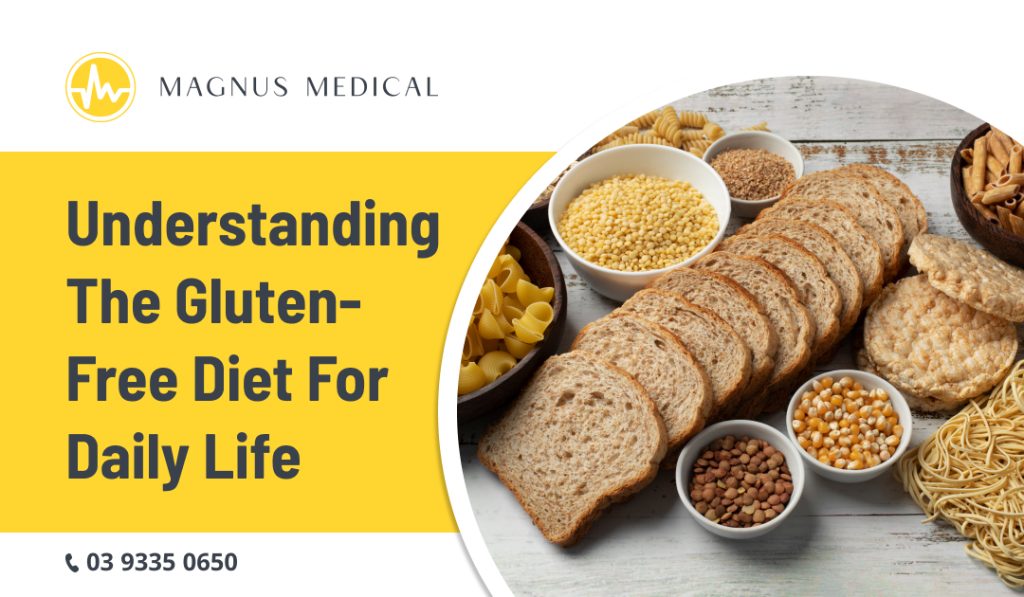
In a gluten-free diet, you are likely to avoid eating foods that have the protein gluten, which is found in barley, wheat, spelt, and rye. A gluten-free diet may include foods like vegetables, fruits, meats, and other gluten-free products.
Gluten is a protein that gives flour a sticky consistency when you mix it with water. It is also related to the chewy texture of bread. The term gluten comes from the Latin word for glue. It is usually found in products such as pasta, bread, and baked goods. If you struggle with uncomfortable gastrointestinal symptoms after eating gluten-rich foods, then you may be recommended to stick to a gluten-free diet.
People who have celiac disease are often recommended to avoid eating gluten because it can damage the lining of the small bowel and can cause serious health problems. It is important for both adults and children with celiac disease to avoid eating gluten and follow a gluten-free diet to reduce the risk of further complications. For a proper gluten-free diet, you can get in touch with dietitian Glenroy at Magnus Medical Centre.
If you are diagnosed with celiac disease, it is suggested that you follow a lifelong gluten-free diet. This is because you might be sensitive to gluten, which will never disappear. Gluten can damage your small bowel if you eat it, even in tiny amounts. Your dietitian may suggest to follow a gluten-free diet for other reasons – for instance, if you have irritable bowel syndrome, wheat allergy, or non-celiac gluten sensitivity. This refers to various symptoms caused by eating gluten, such as dermatitis herpetiformis. It is advised to seek help from a dietitian to get personalised gluten-free diet plan, especially if you have other health problems or dietary needs. A dietitian can:
If you experience any of the following symptoms after eating foods that have gluten, then you need to speak to a healthcare provider:
There are various gluten-free options that will allow you to enjoy delicious meals. If you are on a gluten-free diet, you can eat:
In simple words, traditional couscous is not gluten-free. It is generally made from semolina, derived from durum wheat. It has a significant amount of gluten, making it unsafe for people with gluten sensitivity.
Yes, buckwheat is gluten-free because it is a nutrient-rich seed, not a cereal grain. It is safe for gluten-sensitive diets.
Pure corn flour is gluten-free because it is made from maize. It is a versatile thickener for soups, desserts, and sauces. However, make sure to check the label for gluten-free certification.
Sushi is not inherently gluten-free, although its base ingredients – fish, rice, and seaweed – are. The main risk for gluten contamination includes imitation crab, soy sauce, tempura, and sauces.
Traditional soy sauce is not gluten-free as it is brewed with soybeans, wheat, water, and salt.
Most icing sugar is naturally gluten-free. It is made from sugar and an anti-caking agent, usually potato starch, corn starch, or tricalcium phosphate, which are usually safe.
Conclusion
If you are looking to follow a gluten-free diet, you need to completely avoid the protein gluten, which is found in baked goods, pasta, and other wheat-based foods. If you are not sure about how to plan balanced meals, you can speak to a professional dietitian at Magnus Medical, which is a trusted Glenroy Medical Centre.