Adenoids are among the lymph nodes that help the body combat disease and infection. They play an important role in keeping the body healthy. However, when germs attack adenoids, they can cause problems. In this blog post, we’ll discuss how to diagnose enlarged adenoids, their symptoms, causes, and treatment options.
Adenoids are lymphatic tissue located at the back of your nasal cavity. They are also known as the pharyngeal tonsil, made up of different cell types that help fight off infection and keep allergens out. They have a good blood supply and very few pain fibers, little fat in them, and contain a number of lymph nodes. They are present at birth and remain throughout your lifespan. Kids have two sets of lymph nodes. One set is found in the neck, while the other set is in the groin. Lymph nodes in the neck are very small, but they are crucial for fighting germs. These nodes drain the mouth, nose, and throat. The nodes present in the groin are part of the lymphatic system that regulates fluids in your child’s body.
After the age of 7, adenoids start to shrink in most people. They affect how you breathe in different ways, as they have functions that help clean your nasal cavity by trapping bacteria, dirt, allergens, and dust.
Individuals with enlarged adenoids may have the following symptoms:
• Stuffy or runny nose
• Sore throat
• Difficulty sleeping
• Feeling like your ears are blocked
• Difficulty swallowing
• Snoring
• Swollen neck glands
• Snoring
• Bad breath or chapped lips (because of breathing through the mouth)
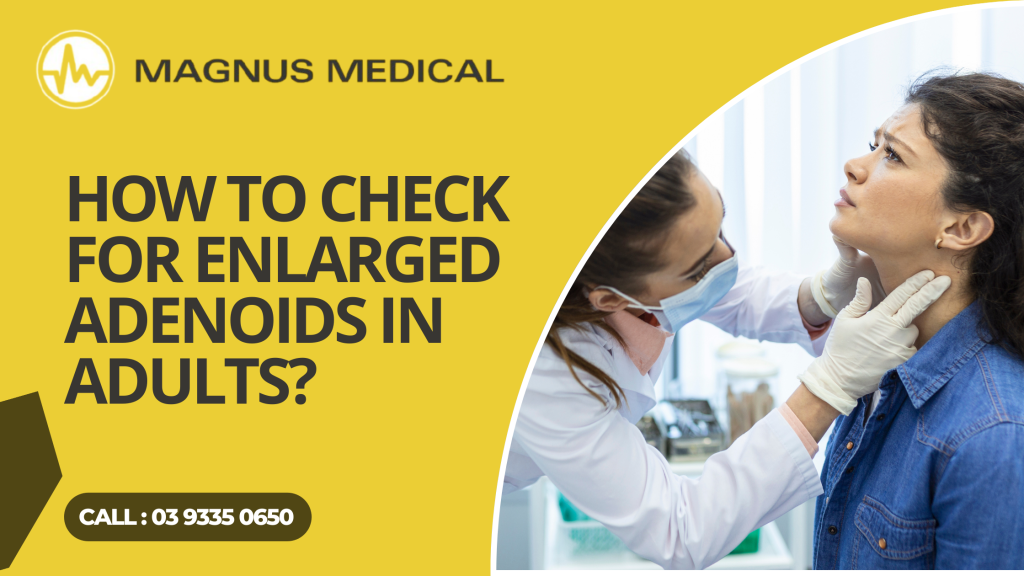
You can also speak to our Glenroy GP for a physical exam to check for enlarged adenoids. They will check the back of your throat. This may be done by inserting a flexible and thin scope with a mirror through your nose and down the back of your throat. This process may be uncomfortable but should not be painful. You need to tell your doctor if you have a sore throat, stuffy nose, or if your ears hurt. You may also be suggested to get a blood test done to see if you have an infection. Your doctors may also order a sleep study to check if you have sleep apnea. This helps determine whether enlarged adenoids are the main cause of your sleep problems.
Treatment for enlarged adenoids depends on how long your adenoids have been enlarged and your age. A doctor will monitor their size over time, and may prescribe medicines or a nasal spray to alleviate swelling. Surgery to remove your tonsils and adenoids at the same time is common. This is common if you have frequent throat and ear infections, sleep apnea, or trouble breathing.
Many adults who have had their enlarged adenoids removed have reported an improvement in their snoring.
Many adults with enlarged adenoids experience recurrent ear infections that don’t resolve with antibiotics or have accumulated fluid in their ears, and you may need adenoid removal surgery.
Your adenoids may be infected if you snore or breathe loudly while sleeping. In most cases, these symptoms indicate that the adenoids are enlarged.
Enlarged adenoids can contribute to the following problems:
• Ongoing sinusitis
• Difficulty sleeping
• Difficulty breathing through the nose, which can cause children to breathe through their mouth, which may cause bad breath
• Ear infection: Enlarged adenoids can block the tubes that drain the middle ear, which can cause fluid to build up in the ear, leading to infections
Enlarged adenoids cause children to breathe through the mouth, which can cause obstructive sleep apnoea (OSA). They may also snore.
Conclusion
It’s common for children to have enlarged adenoids. However, it’s essential to get them examined if you notice that they are experiencing symptoms of enlarged adenoids. You can also speak to doctors at Magnus Medical Centre Glenroy.